
From High Priests to High Jewellery: The Sacred History of Birthstones
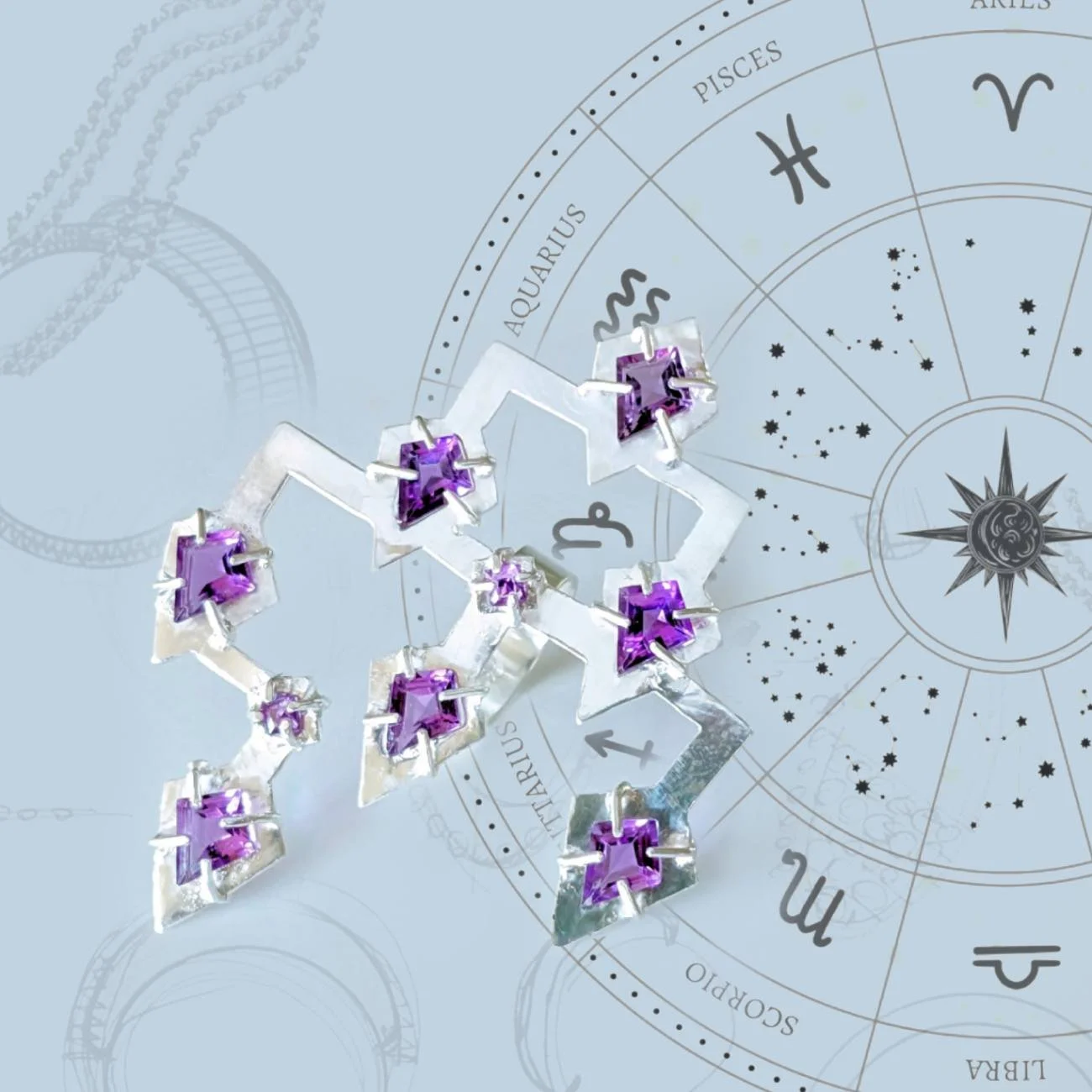
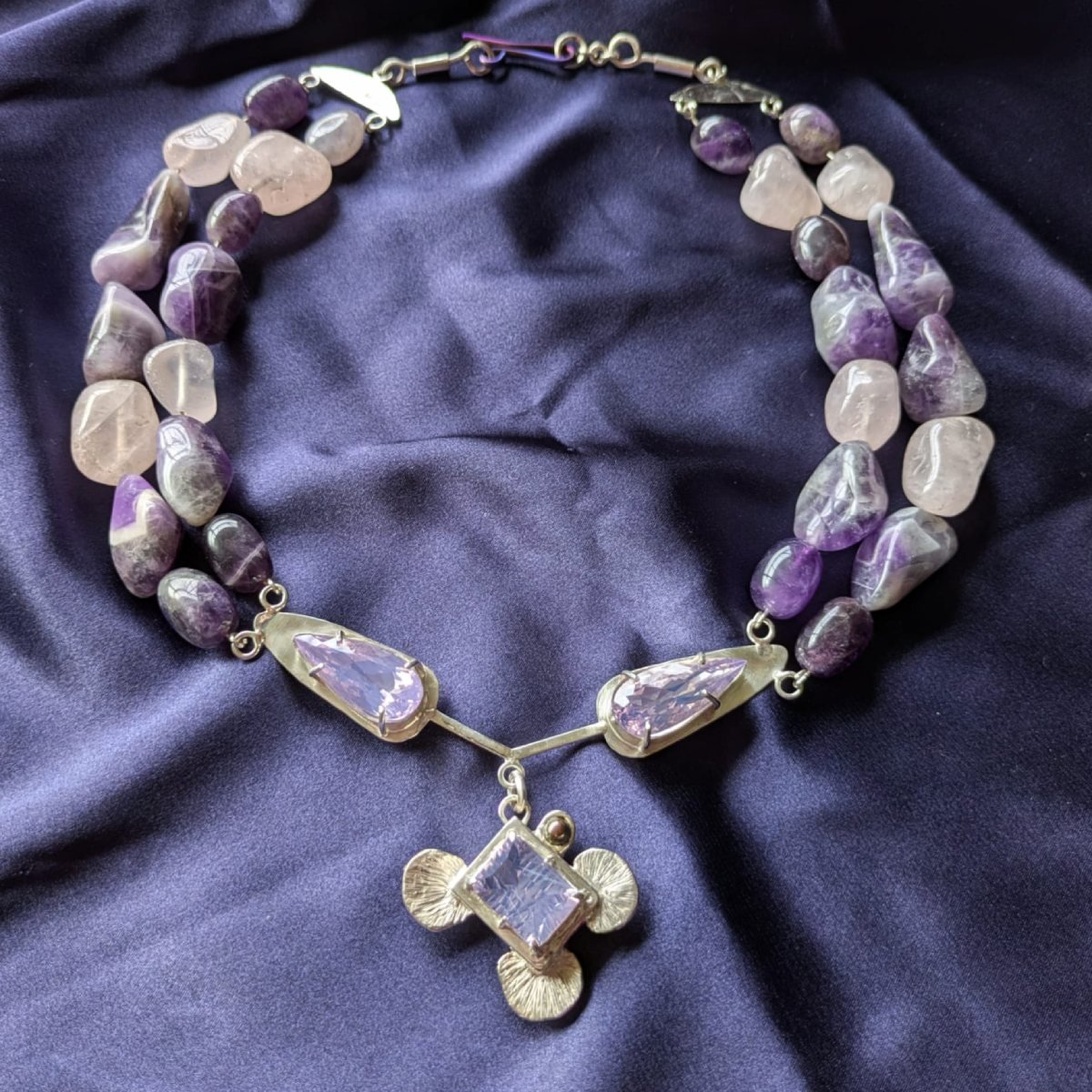
The Burden of Memory, 2023. Responsibly sourced sterling silver, kite and princess cut Brazilian amethysts, birthstone of February. Lia Anderson - Malki Studio
The transformation of a mineral from geological specimen to personal talisman is a process that spans millennia. Long before gemstones were precision-cut and certified, they were catalogued by colour, aligned with constellations, and set into sacred vestments. Today’s birthstones are the surviving heirs of ancient scripture, early mineralogy, medieval mysticism, and modern commerce.
Sacred Foundations: The Breastplate of Aaron
The lineage of the twelve-stone system begins in the Book of Exodus with the Breastplate of Judgement (Choshen Mishpat), worn by Aaron, the first High Priest of the Israelites. This ceremonial garment was set with twelve gemstones, each engraved with the name of one of the tribes of Israel. These stones were believed to function as oracular devices, used in conjunction with the Urim and Thummim to divine fate.

Le mariage de la Vierge, Alexandre-François Caminade, 1824. Oil on canvas. Painting depicting the Breastplate of Judgement (Choshen Mishpat), worn by Aaron, the first High Priest of the Israelites.
Interpretation and Rotation: From Tribes to Zodiac
In the 1st century CE, the Jewish historian Titus Flavius Josephus described the twelve stones of the breastplate and their significance, though the later tradition of associating these stones with the twelve signs of the zodiac emerged in Hellenistic and medieval thought. By the 5th century, St. Jerome encouraged the Christian adoption of these gems, and by medieval times, the devout would collect and wear all twelve stones simultaneously in belts and ornaments.
By the 8th and 9th centuries, influenced by surging trade with the East and its traditions of protective amulets, the custom shifted toward a monthly rotation. Rather than wearing the full set at once, collectors would own all twelve jewels but wear only the specific stone of the current month. It was believed that a gem's healing properties and metaphysical energies were at their peak during its corresponding time of year.
The Rise of the Natal Stone
The concept of a single, lifelong “natal stone” began to emerge in the 16th century Europe and became widespread by the 18th century. This shift marked a definitive evolution in the history of adornment: what began as liturgical symbolism was transformed into a permanent personal signature—the birthstone tradition we recognise today.
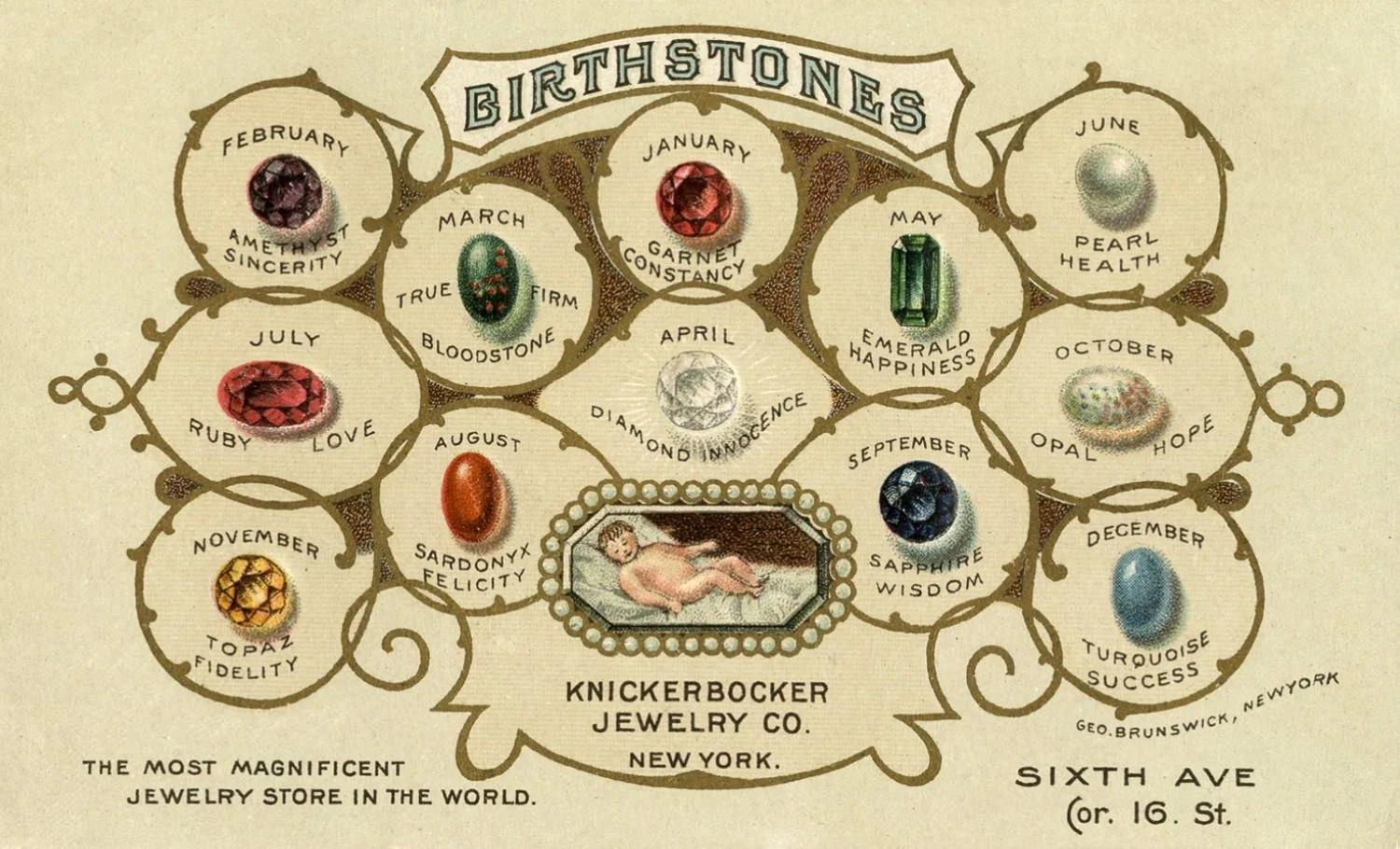
Early 1900s promotional card for birthstones used by Knickerbocker Jewelry & Co. New York.
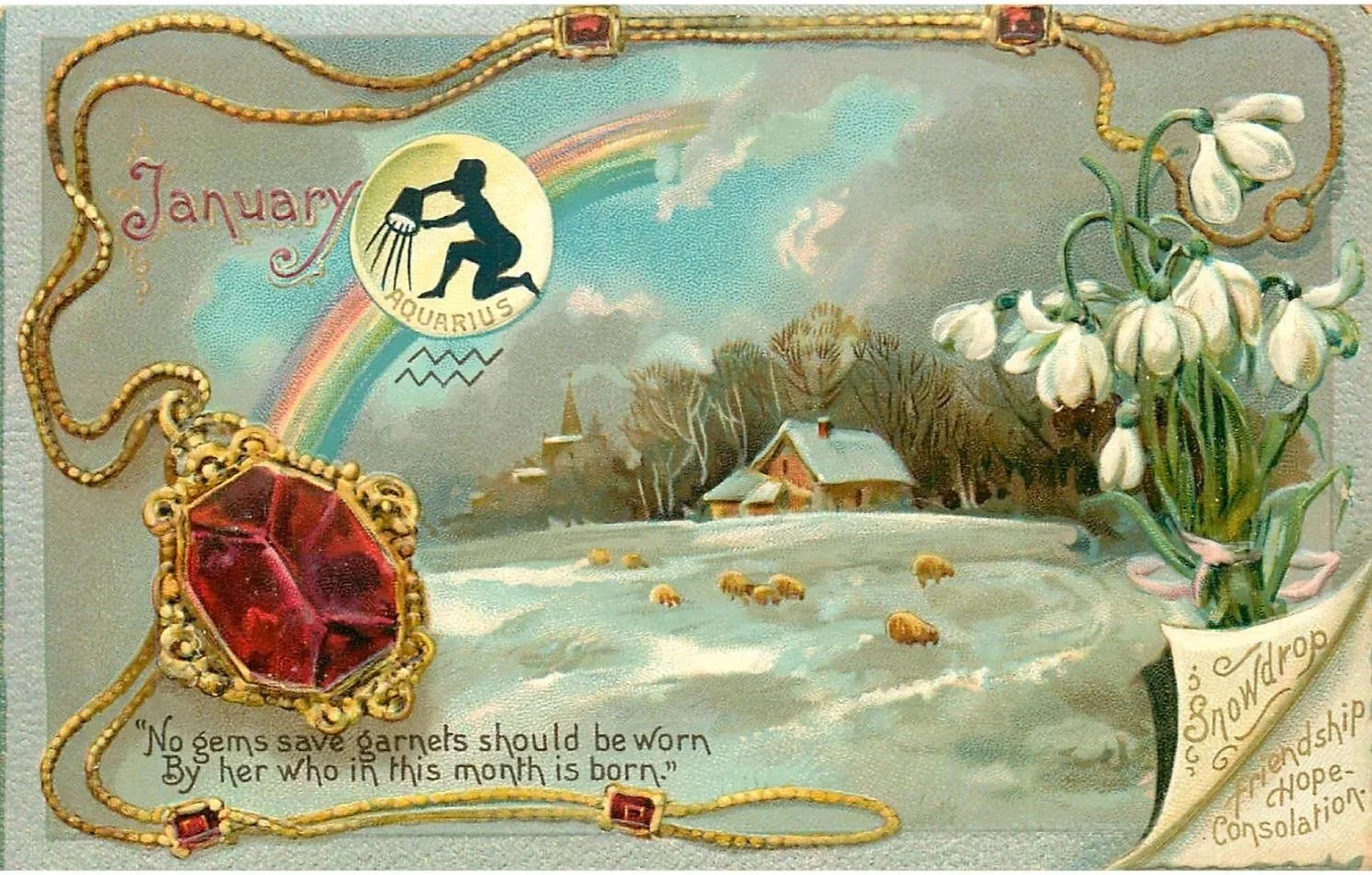
Vintage Raphael Tuck & Sons postcard from 1911 featuring the zodiac sign Aquarius and January's birthstone, the garnet.
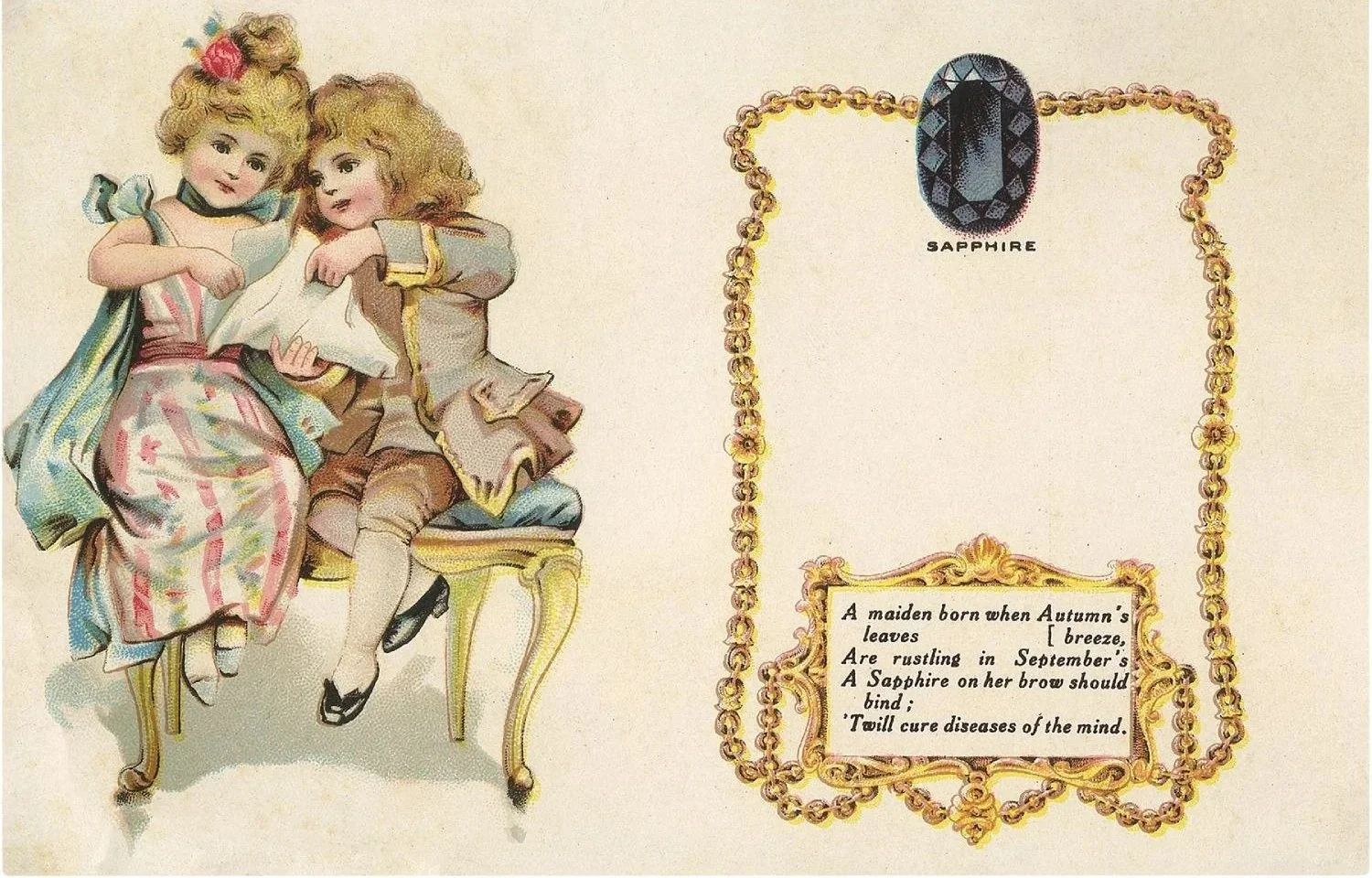
Vintage postcard with poem for September birthstone, the sapphire, early 1900s.
The Modern Legacy: Haute Joaillerie
Pioneers like Tiffany & Co. began marketing “Natal Stones” in the 1870s, utilising Victorian poetry to link minerals to destiny. In 1912, the birthstone calendar was standardised by the National Association of Jewelers, a pivotal moment that transitioned the historical talisman into the realm of modern luxury. Later updates by trade organizations have since expanded the list to include new mineral discoveries like Tanzanite and Spinel, reflecting shifts in rarity and global demand.
Enduring Significance
From the sacred vestments of high priests to the vitrines of high jewellery houses, birthstones endure. Today, they are viewed as earthly anchors for metaphysical help, connecting the terrestrial, the celestial, and the personal. They satisfy an ancient human desire for divine alignment, a search for meaning in the unknown, and our undeniable attraction to brilliance and BLING!
Birthstones: The Mineralogical Calendar
-
The year opens with the Garnet, a complex silicate mineral group defined by its extraordinary geological variety and resilience. Derived from the Latin granatus (“seed-like”) due to its resemblance to pomegranate seeds, this species forms under the intense pressure of regional metamorphism and occurs in nearly every hue except true blue. With a Mohs hardness of 6.5–7.5 and no distinct cleavage, it is a premier choice for daily-wear jewellery. Historically revered as the “Traveler’s Stone,” ancient and medieval traditions held that the garnet possessed an internal luminescence, serving as a protective talisman to illuminate the path for those far from home.
Garnet is prized as a stone of grounding and manifestation; it is believed to revitalise the wearer’s energy, cultivate courage in times of transition, and sharpen one's focus when turning creative intentions into physical reality.


-
February follows with amethyst, a distinguished variety of quartz celebrated for its enchanting violet to deep purple hues. Its name derives from the Greek amethystos, meaning “not drunken,” reflecting an ancient belief that this stone could protect its wearer from intoxication. With a Mohs hardness of 7 and lacking cleavage, amethyst is highly durable and resistant to scratches, making it an excellent choice for everyday jewelry—though it should be kept away from extreme heat to preserve its vibrant color.
Historically, amethyst was a symbol of royalty and high-ranking clergy, frequently set into crowns and episcopal rings as a sign of piety and mental clarity.
Amethyst is prized as a stone of spiritual protection and intuition, believed to calm the mind, promote emotional balance during stressful times, and sharpen focus for connecting with higher wisdom and inner peace.


-
March presents aquamarine, a breathtaking blue-to-cyan variety of the mineral beryl that owes its coastal color to trace amounts of ferrous iron. Its name is derived from the Latin aqua marina (“water of the sea”), and it was historically carried by sailors to ensure safe passage across stormy waters. With a Mohs hardness of 7.5–8 and no easy cleavage, aquamarine is remarkably durable and resistant to scratches, making it an exquisite choice for daily-wear jewelry. Historically, it was believed to be the treasure of mermaids and was used as a symbol of youth, health, and hope.
Aquamarine is prized as a stone of serenity and clear communication; it is believed to quiet the wearer’s mind, cultivate patience in times of conflict, and sharpen focus when expressing inner truths to the world.
-
April is defined by the diamond, a highly valued gemstone composed of pure carbon arranged in a crystal lattice through intense heat and pressure. As the hardest known natural substance, it ranks 10 on the Mohs scale, though its perfect cleavage means it can chip from a sharp blow. Its name comes from the Greek adamas (“invincible”), reflecting its legendary status as a symbol of eternal love and strength.
Diamonds are prized not only for their unmatched hardness but also for their exceptional brilliance and fire. Historically, they were worn by kings and warriors for protection and courage.
Diamond is prized as a stone of purity and invincibility; it is believed to amplify the wearer’s energy, cultivate endurance in hardship, and sharpen focus when manifesting a life of abundance and clarity.
-
May is defined by the emerald, a prestigious green variety of beryl whose lush color comes from trace amounts of chromium and vanadium. Forming mainly in hydrothermal veins, emeralds are known for their unique "jardin" inclusions. With a Mohs hardness of 7.5–8, their natural inclusions make them more fragile than other beryls, requiring careful wear. Historically, emeralds were favored by Cleopatra and believed by the Romans to soothe the eyes and symbolize spring’s rebirth.
Emerald is prized as a stone of compassion and abundance; it is believed to harmonize the heart, cultivate loyalty during change, and sharpen focus when manifesting domestic bliss and unconditional love.
-
Pearl
June is most traditionally represented by the pearl, a unique organic gemstone formed within the soft tissue of living saltwater and freshwater molluscs. Unlike mineral gems, pearls develop their natural lustre without polishing. With a Mohs hardness of 2.5–3.0, pearls are the most delicate birthstone, requiring gentle care to avoid scratches and chemical damage. Historically, pearls were known as “teardrops from heaven” and were so prized in Tudor England that the era was called the “Pearl Age.”
Pearl is prized as a stone of purity and inner wisdom; it is believed to calm emotions, cultivate integrity during trials, and sharpen focus when seeking balance and tranquillity.
Alexandrite
Alexandrite, a remarkable variety of chrysoberyl known for its dramatic colour-change properties, appearing green in daylight and purplish-red under incandescent light. This "emerald by day, ruby by night" effect is caused by a rare geological intersection of beryllium and chromium. With an impressive Mohs hardness of 8.5 and excellent toughness, it is one of the most durable gemstones for any type of jewellery. Historically discovered in the Ural Mountains and named for Tsar Alexander II, it became a symbol of good fortune and national pride.
Alexandrite is prized as a stone of balance and transformation; it is believed to bridge the wearer’s physical and spiritual worlds, cultivate joy in times of struggle, and sharpen one's focus when adapting to life’s dualities.
Moonstone
June is also represented by Moonstone, a variety of feldspar famous for its "adularescence"—a ghostly blue or white sheen that seems to billow across the stone. With a Mohs hardness of 6–6.5 and two directions of perfect cleavage, it is relatively delicate and prone to cracking if struck. Historically, it was believed to be composed of solidified rays of the moon and was used as a powerful amulet for lovers and travellers.
Moonstone is prized as a stone of new beginnings and inner growth; it is believed to soothe the wearer’s stress, cultivate empathy in times of discord, and sharpen one's focus when navigating life’s emotional tides.









-
July is represented by the Ruby, the fiery red variety of the mineral corundum coloured by the presence of chromium. Known as the "King of Precious Stones," rubies are exceptionally resilient, boasting a Mohs hardness of 9, making them incredibly resistant to scratches and everyday wear. Historically, ancient cultures believed rubies contained an internal flame that could boil water, and they were often sewn into the skin of warriors to grant invincibility.
Ruby is prized as a stone of passion and vitality; it is believed to stimulate the wearer’s life force, cultivate confidence in times of doubt, and sharpen one's focus when pursuing grand ambitions and romantic desires.
-
Peridot
August showcases Peridot, one of the few gemstones that occurs in only one colour: a vibrant olive-green caused by the presence of iron. Formed deep within the Earth’s mantle and brought to the surface by volcanoes—and occasionally arriving via meteorites—it has a Mohs hardness of 6.5–7. While durable, it is sensitive to rapid temperature changes and should be cleaned with care. Historically known as the "Gem of the Sun," ancient Egyptians believed it protected against night terrors and evil spirits.
Peridot is prized as a stone of renewal and prosperity; it is believed to cleanse the wearer’s aura, cultivate release in times of resentment, and sharpen one's focus when seeking personal growth and professional success.
Spinel
While Peridot is the traditional choice, Spinel was recently added as an official August birthstone. Often mistaken for Ruby due to its intense reds and pinks. It forms in octahedral crystals and has a high refractive index. Boasting a Mohs hardness of 8, it is a durable stone appropriate for rings. Historically, the "Black Prince's Ruby" in the British Imperial State Crown is actually a massive red spinel.
Spinel is prized as a stone of revitalisation and hope; it is believed to renew the wearer’s spirit, cultivate persistence in times of exhaustion, and sharpen one's focus when overcoming difficult personal challenges.
-
September is defined by the Sapphire, the blue variety of corundum (though it occurs in nearly every colour). Coloured by titanium and iron, it is a gemstone of immense strength with a Mohs hardness of 9 and no cleavage, making it one of the most durable choices for engagement rings and heirloom jewellery. Historically, sapphires were worn by royalty to guard against envy and were believed to represent the celestial heavens, offering divine favour to the wearer. Ancient civilizations believed the Earth rested upon a giant sapphire, whose reflection gave the sky its blue hue.
Sapphire is prized as a stone of wisdom and discipline; it is believed to calm the wearer’s mind, cultivate self-mastery in times of chaos, and sharpen one's focus when seeking spiritual truth and mental order.
-
Opal
October presents the Opal, a unique hydrated silica gemstone celebrated for its "play-of-colour," a kaleidoscopic shimmer caused by the diffraction of light through microscopic silica spheres. Historically, it was revered as the most magical of gems because it appeared to contain the essence of all other stones. This sentiment was most famously captured by the Roman naturalist Pliny the Elder, who wrote that in the Opal, "you shall see the living fire of the ruby, the glorious purple of the amethyst, and the sea-green of the emerald, all glittering together in an incredible mixture of light." With a Mohs hardness of 5.5–6.5, opals are softer than most birthstones and require gentle handling. Historically, they were associated with hope, luck, and purity.
Opal is prized as a stone of creativity and emotional amplification. It is believed to spark the wearer’s imagination, cultivate spontaneity in times of rigidity, and sharpen one's focus when expressing true individuality.
Tourmaline
Because Opals are delicate, Pink Tourmaline, with a Mohs hardness of 7–7.5, is a popular modern alternative. Its name comes from the Sinhalese toramalli, meaning "stone of mixed colours"—a fitting title for a complex boron silicate mineral that occurs in more hues and bi-color combinations than almost any other gemstone. Tourmaline is dichroic, meaning it can show two different colors or shades depending on the angle you look at it; this happens because the crystal absorbs light differently along its length than it does across its width. Historically, tourmaline was highly valued across cultures, and it was especially appreciated by Chinese royalty, who believed it brought harmony and good fortune.
Tourmaline is prized as a stone of self-love and emotional healing. It is believed to release the wearer’s anxieties, cultivate compassion in times of grief, and sharpen one's focus when aligning the heart with the mind.


-
Topaz
November features Topaz, a fluorine-bearing silicate that occurs in a wide range of colours, with "Imperial Topaz" being the most coveted. Its name is derived from the Sanskrit tapas, meaning "fire." With a Mohs hardness of 8, it is a very hard stone, though its perfect cleavage means it should be protected from hard knocks. Historically, the Greeks believed topaz could increase strength and even make the wearer invisible during times of peril, while in the Middle Ages, it was used to heal both physical and mental ailments.
Topaz is prized as a stone of intention and manifestation; it is believed to recharge the wearer’s motivation, cultivate faith in times of uncertainty, and sharpen one's focus when directing energy toward specific goals.
Citrine
While Topaz remains the traditional October birthstone, Citrine, a vibrant yellow-to-orange variety of quartz, has become the most popular modern alternative, captivating with its warm, sunlit hues. Its stunning color results from trace amounts of iron, and since natural citrine is quite rare, most gemstones in jewelry are created through heat-treating amethyst, enhancing its brilliance and intensity. With a Mohs hardness of 7 and no cleavage, citrine is remarkably durable and easy to care for, making it a favorite for everyday wear. Historically dubbed the "Merchant's Stone," it was believed to attract wealth and prosperity, serving as a powerful talisman for success.
Today, citrine is celebrated as a stone of manifestation and personal power, inspiring creativity, fostering optimism during challenging times, and sharpening focus to turn professional dreams into reality.


-
Tanzanite
The year concludes with Tanzanite, a rare blue-violet variety of zoisite found only in a small area near Mount Kilimanjaro. Its striking colour is often enhanced by gentle heating to bring out the deep velvety blues and violets. It has a Mohs hardness of 6–7, meaning it is best suited for earrings or pendants where it is less likely to be bumped. Relatively new to the gem world, it was discovered in 1967 and quickly became a symbol of elegance and rarity.
Tanzanite is prized as a stone of transformation and higher consciousness; it is believed to awaken the wearer’s psychic abilities, cultivate composure in times of upheaval, and sharpen one's focus when integrating the heart and the mind.
Zircon
December features Zircon, a zirconium silicate mineral that is one of the oldest materials on Earth, with some crystals dating back over four billion years. Its name likely comes from the Persian zargun, meaning "gold-hued," though it occurs in a spectacular array of colours. With a Mohs hardness of 6–7.5, it is relatively durable, but it is known for being "brittle," meaning its facet edges can chip if handled roughly. Historically, Zircon was often confused with Diamond due to its incredible fire and luster, and in the Middle Ages, it was believed to promote deep sleep and drive away evil spirits.
Zircon is prized as a stone of grounding and protection; it is believed to provide the wearer with physical and mental stamina, cultivate confidence during major transitions, and sharpen one's focus when turning abstract ideas into reality.
Turquoise
December features Turquoise, a hydrated phosphate of copper and aluminium that has been prized for millennia for its rare, sky-blue to robin’s-egg green hues. Its name is derived from the Old French turquois, meaning "Turkish," as the gemstone first reached Europe via trade routes through Turkey. With a Mohs hardness of 5–6, it is a relatively soft and porous stone that requires gentle care to maintain its color. Historically, it was a sacred stone to the Aztecs, Egyptians, and Native American tribes, who viewed it as a protective amulet that connected the spirit of the sky with the energy of the earth.
Turquoise is prized as a stone of communication and wholeness; it is believed to enhance the wearer's intuition, cultivate serenity during chaotic times, and sharpen one's focus when speaking their truth with clarity and heart.


Drop Earrings: titanium, responsibly sourced sterling silver, responsibly sourced 14kt gold, ethically sourced 1.95ct (3.9ct combined) Brazilian garnets, cultured freshwater pearls.
The richly coloured Diatom earrings are a one-of-a-kind marriage of heat coloured titanium, sterling silver, and 14kt gold. The earrings are inspired by the photosynthetic microorganisms known as diatoms, which produce up to half of the world’s oxygen. The shells of some species of diatoms are almost crystalline in appearance, with sharp geometric shapes that are stunningly complex.
Each earring is based on etched titanium that has been heat coloured in saturated hues of green and pinkish purple. The deep red of the ethically sourced garnets is a complimentary colour to the titanium, and contrasts wonderfully with the brushed sterling silver settings that feature twisted wire and rivets. Dangling from the 14kt gold are two dark cultured freshwater pearls, with slightly mismatched undertones of green on one pearl, and bronze on the other.
Dimensions: approximately 3 cm x 3.5 cm x 2 cm